
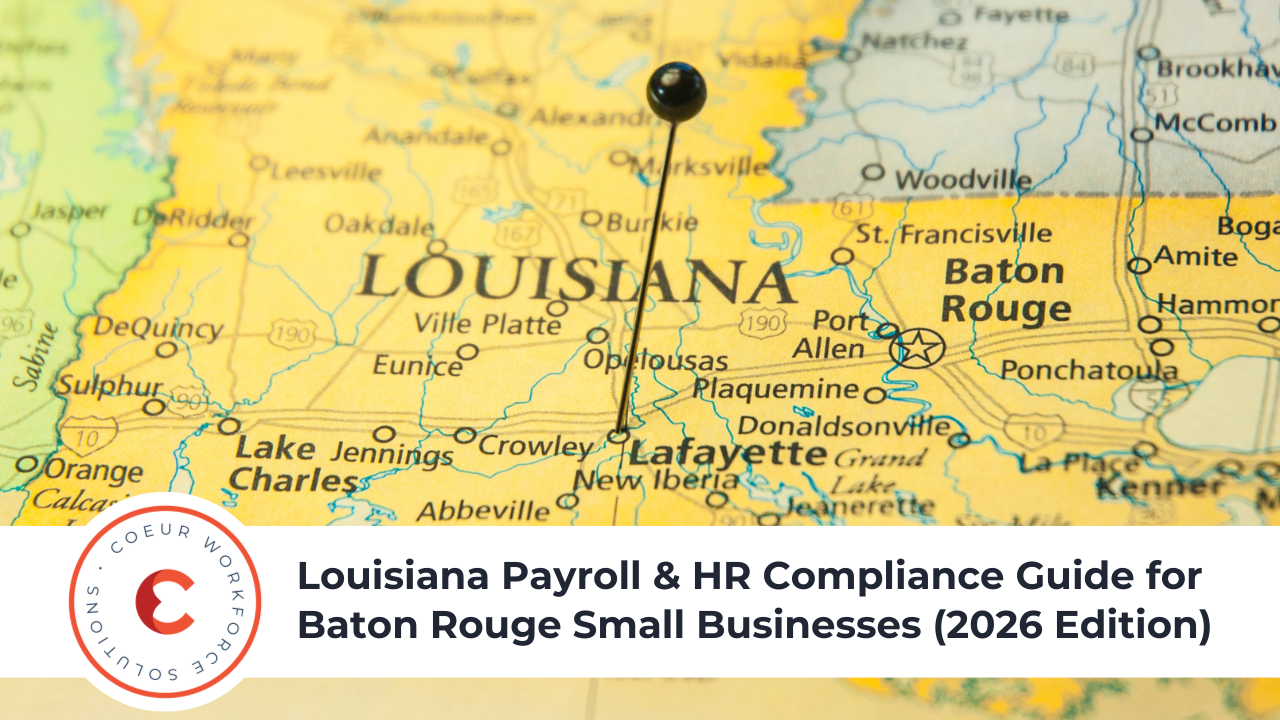
Louisiana payroll rules change often enough that “winging it” is a liability. If you run a small business in Baton Rouge, you’re responsible for the right wage rates, overtime rules, tax deposits, filings, and employee notices, on top of everything else on your plate. Even if you’re still comparing the best payroll and HR services in Baton Rouge, you still carry the legal responsibility for compliance. This 2026 guide walks through the key Louisiana payroll and HR requirements, then shows how Coeur’s local team and UKG-powered platform help you stay compliant without losing sleep.
Why Payroll & HR Compliance Matters for Baton Rouge Small Businesses in 2026
Payroll and HR compliance are more than just legal obligations, they’re crucial for smooth operations and building trust with employees. Non-compliance can lead to costly fines, audits, and even lawsuits, affecting both profitability and reputation. For Baton Rouge small businesses, mistakes in payroll, like incorrect tax filings or missed overtime payments, can have significant financial consequences.
Maintaining compliance also plays a key role in employee morale. Mistakes in payroll, such as incorrect pay or delays, can lead to dissatisfaction, decreased trust, and even turnover. Businesses that prioritize compliance and communicate clearly with their teams demonstrate they value their workforce, which helps boost employee engagement and retention.
Overview of 2026 Payroll Laws in Louisiana
In 2026, Baton Rouge employers need to stay aware of key changes to payroll laws in Louisiana. While federal tax rates and laws impact all businesses across the country, Louisiana-specific regulations must also be followed. For instance, state income tax rates and local tax rates may be subject to change, and failure to adjust payroll accordingly can result in discrepancies and potential penalties.
One of the most important aspects of Louisiana’s payroll laws is understanding its unemployment insurance tax rates. The state adjusts these rates based on an employer’s experience rating, meaning businesses with higher rates of unemployment claims might face higher tax rates. Employers must regularly review their experience rating and keep track of updates from the Louisiana Workforce Commission to ensure accurate tax payments.
While Louisiana follows the federal Fair Labor Standards Act (FLSA) for most labor law matters, there may be state-specific adjustments to things like minimum wage, overtime exemptions, or tax credits that employers need to account for in their payroll systems.
It’s critical to regularly review and verify that payroll practices align with both state and federal laws. Although the basics might stay the same, minor regulatory updates are common, and Baton Rouge businesses must be proactive in adapting to these changes to avoid compliance issues.
Key Payroll Tax Obligations for Baton Rouge Employers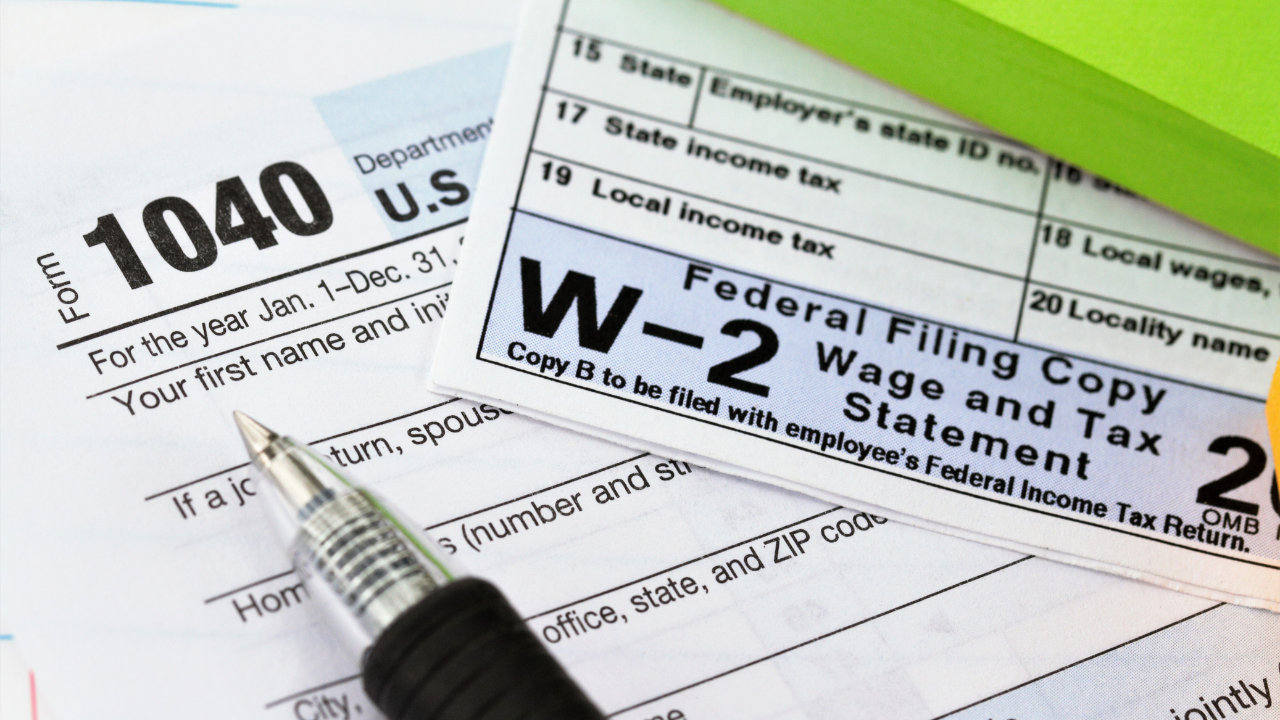
Payroll tax compliance is a cornerstone of staying compliant with Louisiana’s labor laws. Baton Rouge employers must ensure they are accurately withholding the correct amounts for federal, state, and local taxes. This includes everything from FICA (Social Security and Medicare taxes) to state income tax and Louisiana unemployment taxes. These tax obligations don’t just stop at withholding; businesses must also ensure timely submission of payments to the relevant tax authorities to avoid penalties.
- Federal Taxes: Employers must withhold Social Security and Medicare taxes under FICA and deposit those with the IRS. Failing to withhold the right amount or missing deadlines can result in severe penalties.
- State Taxes: Louisiana state income tax should be withheld according to the state’s rates, and this can change annually. Employers must ensure that they’re up to date with any adjustments.
- Local Taxes: Baton Rouge may have additional local tax obligations that employers should not overlook. Make sure to verify if there are local income taxes or specific filing requirements.
Keeping accurate records and using reliable payroll software can streamline the process and prevent errors. By regularly auditing payroll records, Baton Rouge businesses can ensure that their payroll tax obligations are met accurately, avoiding unwanted fines or penalties.
Overtime Rules and Wage & Hour Basics for Louisiana Employees
Understanding Louisiana’s overtime rules and wage laws is a critical aspect of payroll compliance for Baton Rouge employers. While the Fair Labor Standards Act (FLSA) governs most wage and hour regulations, Louisiana has its own set of rules and exceptions that employers need to consider.
For instance, Louisiana follows the federal standard for minimum wage, which is currently $7.25 per hour. However, overtime pay is a key area where businesses can run into trouble if they’re not careful. The federal overtime rule stipulates that non-exempt employees must be paid time and a half for hours worked over 40 in a workweek. In Louisiana, this federal law applies, but employers should always verify if there are any state-specific adjustments or additional requirements.
It’s important to know the difference between exempt and non-exempt employees. Exempt employees, usually those in salaried positions like managers or professionals, are not entitled to overtime pay. Non-exempt employees, however, are entitled to overtime wages. Misclassifying employees can result in substantial back wages and penalties, making classification a critical part of payroll accuracy.
You also need a working understanding of Louisiana labor laws for salaried employees, not just hourly staff, so exempt roles are classified and paid correctly. By reviewing employee classifications regularly and ensuring that overtime laws are being followed, Baton Rouge businesses can maintain compliance and avoid costly fines.
Get your payroll and HR on track, schedule a consultation today!
Electronic W-2 Forms and Year-End Reporting in Louisiana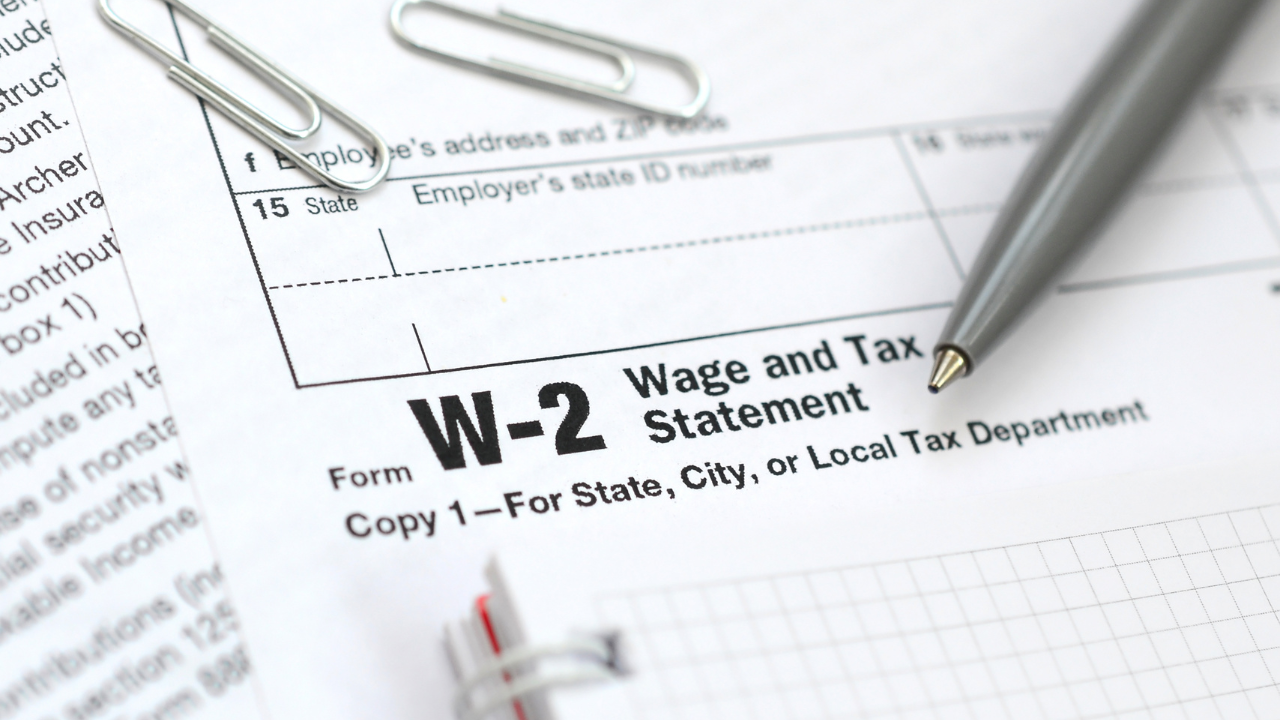
As year-end approaches, employers in Baton Rouge need to stay on top of W-2 reporting. Electronic W-2 forms have become a popular choice due to their speed and convenience. They allow employees to access their W-2s more quickly, reducing the chances of errors and improving overall efficiency. Plus, offering electronic forms can significantly reduce the administrative burden of printing and mailing.
At year-end, it’s also critical to understand how to fill out W-2 forms correctly so they match what you’ve actually withheld and deposited.
In Louisiana, employers are allowed to issue W-2 forms electronically, provided that employees consent to receive them in this manner. By offering electronic forms, businesses can streamline their year-end processes and reduce the risk of mailing errors, such as forms being sent to outdated addresses.
Moreover, e-filing W-2s with the IRS and the state’s revenue department is typically faster and more efficient than mailing paper forms. E-filing also helps ensure that your organization meets compliance deadlines, avoiding penalties for late filing.
Offering electronic W-2 forms is a win-win for both businesses and employees. Employees gain faster access to their tax documents, while businesses save time and resources. If you haven’t yet offered e-W-2s, consider doing so in 2026 to simplify your year-end reporting.
2026 HR & Payroll Compliance Checklist for Baton Rouge Employers
To wrap up the year and prepare for 2026, Baton Rouge employers can follow this simple HR and payroll compliance checklist:
- Verify Payroll Tax Rates: Review federal, state, and local tax rates to ensure accurate withholding.
- Ensure Proper Classification: Double-check employee classifications (exempt vs. non-exempt) to avoid misclassifications.
- Review Overtime Compliance: Confirm that overtime policies are up-to-date and align with state and federal laws.
- Offer Electronic W-2s: If not already implemented, consider offering electronic W-2 forms for faster, easier year-end reporting.
- Conduct Year-End Payroll Audits: Review payroll records for discrepancies or errors before closing the year.
By following this checklist, Baton Rouge businesses can stay ahead of payroll issues and start the new year confidently, knowing they are fully compliant with all payroll laws.
Stay Compliant, Focus on Growth
Payroll and HR compliance doesn’t have to pull you away from running your business, but ignoring it isn’t an option. The right processes and tools turn Louisiana’s 2026 rules into a manageable checklist instead of a constant worry.
For many Baton Rouge employers, the simplest way to stay compliant is to lean on outsourced HR services for small businesses through a local partner that understands Louisiana rules.
If you’d rather focus on customers and growth while a local team keeps your payroll, taxes, and HR records on track, Coeur can help. Coeur Baton Rouge-based specialists combine modern payroll technology with practical human resource outsourcing support, so you stay compliant without building a large internal HR department. Schedule a quick review of your current setup and simplify your 2026 compliance workload.