
Quick Summary: Starting with the 2026 tax year, employers must report qualified tips and qualified overtime separately on Form W-2. The IRS added Box 12 code TP for total cash tips reported to the employer, Box 12 code TT for qualified overtime compensation, and Box 14b for the Treasury tipped occupation code. For overtime, only the premium half of time and a half is reportable as qualified overtime, not the full payment. A qualified tip has to be voluntary, so mandatory service charges and automatic gratuities on large parties do not count. The transitional penalty relief the IRS offered only covered tax year 2025. For 2026, assume normal enforcement. That means your payroll system has to be tracking these amounts now, because you cannot reconstruct eleven months of tip and overtime detail in January.
If you have tipped or overtime staff, 2026 W-2 tip and overtime reporting is the payroll change most likely to bite you in January, and the window to prepare for it is closing. The One Big Beautiful Bill Act created deductions for qualified tips and qualified overtime, and the IRS built the reporting mechanism into the 2026 Form W-2. There are new codes in Box 12 and a new field in Box 14b. None of that is optional, and none of it can be backfilled from a shoebox. The catch is that the definitions are narrower than most people assume. Qualified overtime is not all your overtime pay. Qualified tips are not all your tips. Get the definition wrong and you either understate a deduction your employees were entitled to or you report figures the IRS can match against and question. If you want the wider context on what the law changed across the board, our post on what payroll teams must do in 2026 under the OBBBA covers the full picture. This one narrows in on the two boxes and what has to change in your system before December.
What Changed on the 2026 Form W-2
Starting with the 2026 tax year, employers have to report qualified tips and qualified overtime as separate line items on Form W-2 instead of leaving them folded into regular wage and tax boxes. The IRS added Box 12 code TP for total cash tips reported to the employer, Box 12 code TT for qualified overtime compensation, and a new field in Box 14b for the Treasury tipped occupation code. Each of these exists because the One Big Beautiful Bill Act created a deduction employees can claim on their own returns, and the IRS needs a clean, separately reported figure to support that deduction instead of asking employees to reconstruct it themselves. For payroll teams, this means the reporting change is really a system configuration change that has to happen months before the W-2 is generated, not a filing season adjustment.
Box 12 Code TP: Reporting Qualified Tips
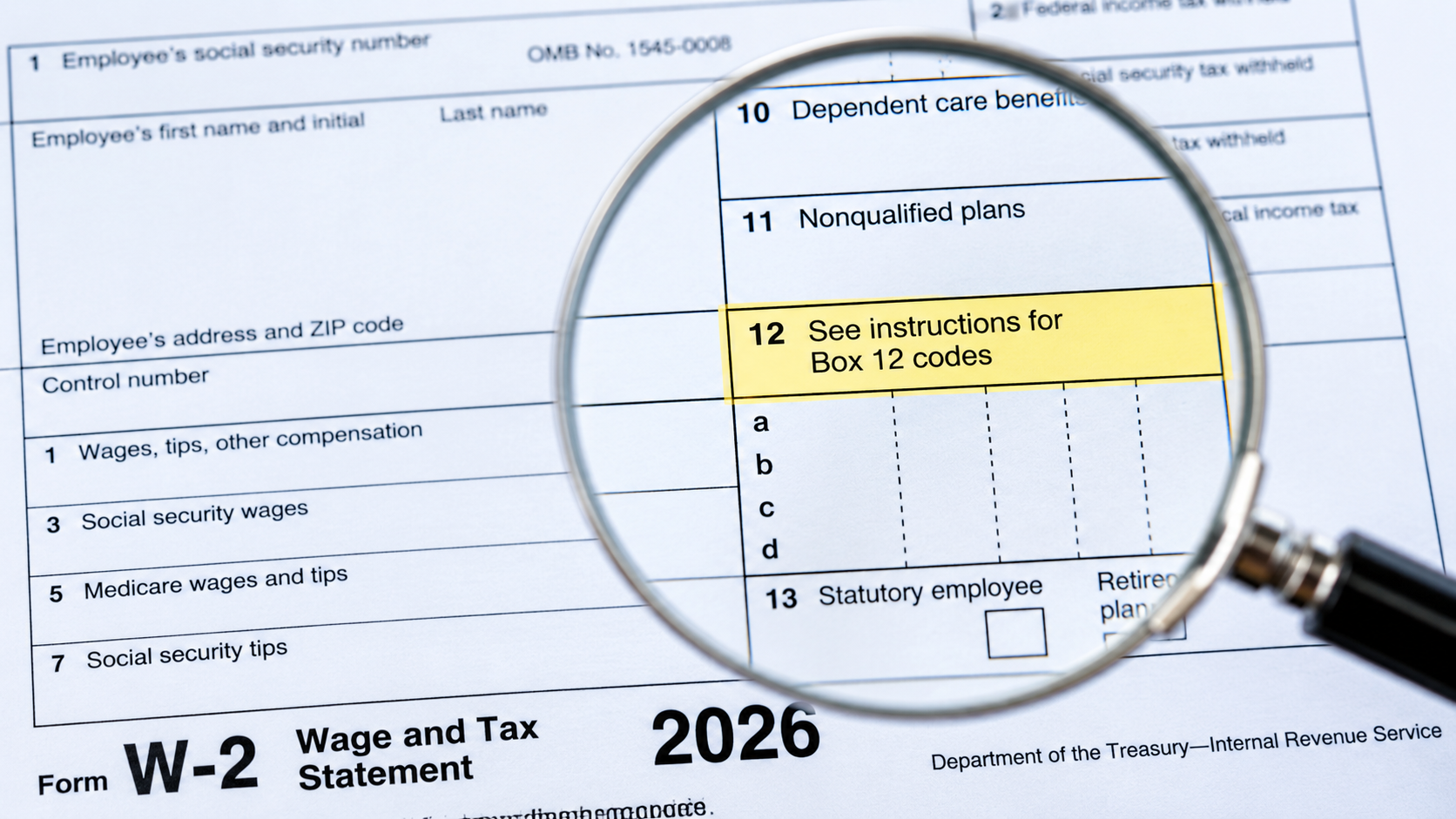
Box 12 code TP reports the total amount of cash tips an employee reported to the employer over the year. It exists specifically so the employee has a clean figure to support the qualified tips deduction on their individual return. It is separate from the tip totals that already flow through the Social Security and Medicare wage boxes, which means your payroll system has to track and output this figure independently rather than assuming it can be derived from numbers already on the form. If your point of sale system and payroll system do not currently talk to each other about tip totals in a way that isolates this figure, that is the gap to close first.
Box 12 Code TT: Only the Premium Half of Overtime
Box 12 code TT reports the total amount of qualified overtime compensation, and the IRS instructions are specific that this is the premium portion only, not the full overtime payment. Consider an employee who earns 20 dollars an hour and works 45 hours in a week. That employee earns time and a half on the 5 overtime hours, which works out to 30 dollars an hour for those hours. The qualified overtime figure that belongs in Box 12 code TT is the 5 hours times the 10 dollar premium, not the 5 hours times the full 30 dollar rate. Reporting the full time and a half payment instead of the premium portion overstates the deduction figure and creates exactly the kind of mismatch the IRS can question later.
Box 14b and the Treasury Tipped Occupation Code
Box 14b is new for 2026 and it holds the Treasury tipped occupation code, a classification that identifies the specific tipped role an employee holds. This box does not populate on its own. Someone in payroll or HR has to assign the correct occupation code to every tipped role before the W-2 run, which means job classifications that may have been informal or inconsistent across locations need to be cleaned up now rather than discovered as a gap during year end processing.
| Box | What It Reports | Who Configures It |
| Box 12 TP | Total cash tips reported to employer | Payroll and POS integration |
| Box 12 TT | Premium portion of qualified overtime only | Earnings code mapping |
| Box 14b | Treasury tipped occupation code | HR job classification |
What Counts as a Qualified Tip and What Does Not
A qualified tip has to be voluntary, and that single word eliminates more tip income than most operators expect. Mandatory service charges, automatic gratuities added to a bill for a large party, and amounts a customer is effectively forced to pay through a pre filled screen on a payment terminal are not voluntary, and therefore do not count as qualified tips. That does not mean the money disappears. Those amounts are still wages and still get reported as such, they simply do not belong in the Box 12 code TP figure. The distinction matters because a restaurant that automatically adds an 18 percent gratuity for parties of six or more needs to make sure its point of sale system is not lumping that amount into the same bucket as tips a customer chose to leave.
The 2025 Penalty Relief Is Gone
The IRS offered transitional penalty relief for tip and overtime reporting, but it applied to tax year 2025 only. For the 2026 tax year, employers should plan around normal enforcement and normal penalty exposure for incomplete or inaccurate reporting. That timeline is the practical argument for configuring tracking now instead of waiting. Eleven months of tip and overtime detail cannot be reconstructed accurately in January from memory, spreadsheets built after the fact, or a point of sale export that was never designed to separate these categories in the first place.
What Louisiana Restaurants and Hotels Should Configure First
Baton Rouge, New Orleans, and river parish restaurants, hotels, and hospitality operators carry the heaviest version of this reporting burden because tipped and overtime heavy staff are the norm rather than the exception. The first configuration priority is separating voluntary tips from mandatory service charges inside the point of sale system, since that separation has to happen at the point of sale before the data ever reaches payroll. The second priority is mapping earnings codes so overtime premium is calculated and stored separately from base overtime pay rather than as one combined figure. The third priority is assigning Treasury tipped occupation codes to every tipped role across every location, which for a multi location operator means auditing job titles that may not be standardized yet. Our restaurant and hospitality payroll for tipped and hourly staff page covers the full range of issues specific to this vertical if you want a broader starting point.
A Mid Year Payroll Audit You Can Run This Week
Three checks tell you where you stand right now. First, pull a sample pay period and confirm whether your system is currently capable of isolating the overtime premium from the full time and a half payment, or whether it is only storing the combined figure. Second, check whether your point of sale export separates voluntary tips from automatic gratuities, or whether both land in a single tip total. Third, confirm whether your current job classifications map cleanly to Treasury tipped occupation codes, or whether that mapping still needs to be built. Any one of these three gaps is fixable in a single configuration session with a payroll provider, but only if it is caught in August rather than discovered while generating W-2 forms in January. Louisiana employers coming up on their own filing obligations should also check our Baton Rouge payroll tax deadlines and filing checklist so the tip and overtime configuration work lines up with the rest of the year end calendar.
Getting Tipped Employees Off Paper Checks While You Are In There
If you are already touching payroll configuration for the reporting change, it is a reasonable moment to also move tipped and hourly staff off paper checks. Direct deposit and pay card options reduce the manual reconciliation that paper checks create, and for operators who are already separating tip and overtime data at a more granular level, that same system typically supports faster, more accurate disbursement without adding a second manual process.
Frequently Asked Questions
What is Box 12 code TP on the 2026 W-2?
Box 12 code TP reports the total amount of cash tips an employee reported to the employer. It exists so the employee can support the qualified tips deduction on their return. It is separate from the tip amounts already flowing through Social Security and Medicare wage boxes, so your payroll system has to track and output it independently.
What is Box 12 code TT on the 2026 W-2?
Box 12 code TT reports the total amount of qualified overtime compensation. The IRS instructions make clear this is the premium portion only. If an employee earns time and a half, the reportable qualified overtime is the extra half, not the full one and a half payment. Reporting the full amount overstates the figure.
Are automatic gratuities and service charges qualified tips?
No. A qualified tip has to be voluntary. Mandatory service charges, gratuities automatically added to a bill for large parties, and amounts a customer is effectively forced to pay through a pre filled screen are not voluntary and therefore not qualified tips. They are still wages, they just do not belong in the qualified tip figure.
Is there still penalty relief for tip and overtime reporting?
The IRS transitional penalty relief applied to tax year 2025 only. For the 2026 tax year, employers should expect normal enforcement and normal penalty exposure for incomplete or inaccurate reporting. That is the practical reason to configure tracking now rather than treating this as a January problem.
What do I need to change in payroll before December 2026?
Three things. Create or map earnings codes that isolate the overtime premium separately from base overtime pay. Separate voluntary tips from service charges in your point of sale and payroll feed. Assign the correct Treasury tipped occupation code to each tipped role so Box 14b populates. Then run a test W-2 to confirm the values land in the right boxes.
Does this apply to salaried employees who get overtime?
It applies wherever qualified overtime compensation is paid, which is driven by whether the overtime is required under the Fair Labor Standards Act, not by whether the employee is paid hourly or on a salary. Louisiana follows the FLSA and has no separate state overtime rule, so the federal test governs here.
Talk to us before your W-2s do the talking for you.
January Is Too Late to Start Tracking This
The 2026 W-2 changes are not complicated to describe. They are just impossible to fix retroactively. Every pay period that runs without separating the overtime premium from base overtime pay, and without separating voluntary tips from service charges, is a pay period you will be reconstructing by hand next winter. Businesses that get this right in August will spend twenty minutes on it. Businesses that discover it in January will spend a week on it, and some of them will file wrong.
Coeur has handled Louisiana payroll for 24 years and our payroll management services team configures earnings codes, tip separation, and W-2 mapping as part of the work, not as a change order. If you are weighing whether to keep doing this in house, our breakdown of local versus national payroll providers is a fair place to start. Either way, get a quote and we will tell you what your current setup is missing.